Biological Deterrents at the Border

Biological Deterrents at the Border: A New Era in India’s Security Strategy

India’s border management has always required a blend of strategy, adaptability, and innovation. With diverse terrains ranging from deserts to dense forests and riverine belts, traditional methods such as fencing and surveillance often face limitations. Recently, a unique and controversial idea has emerged in discussions—the use of biological deterrents like reptiles to secure difficult border areas.

At Destination IAS Academy, we believe that understanding such evolving policy discussions is crucial for aspirants preparing for competitive examinations like UPSC. This topic not only touches upon internal security but also intersects with environmental concerns, governance, and ethical debates.

This blog explores the concept in depth, examining its origin, feasibility, challenges, and broader implications in a structured and detailed manner.

Understanding the Concept of Biological Deterrents

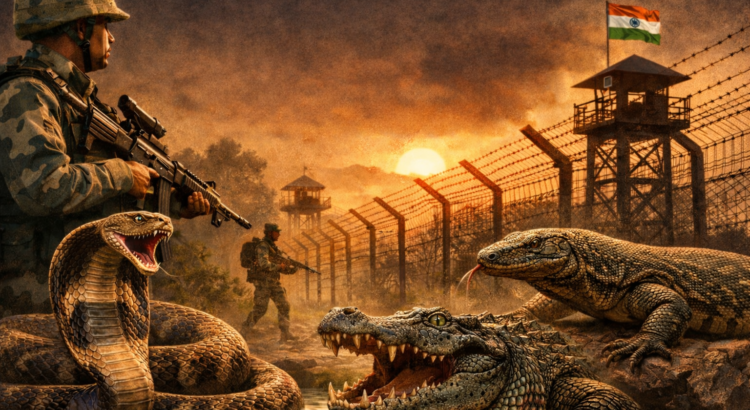
The term biological deterrents refers to the use of living organisms to discourage or prevent certain activities. In the context of border security, this involves introducing potentially dangerous animals—such as snakes or crocodiles—into sensitive areas to act as natural barriers.

The Border Security Force (BSF) is reportedly examining whether such an approach could be effective in regions where physical fencing is not feasible. Nearly 175 km of India’s 4,096 km border with Bangladesh consists of riverine and marshy terrain, particularly in the Sundarbans region of West Bengal. These areas are difficult to monitor continuously due to water flow, dense vegetation, and shifting landforms.

For institutions like Destination IAS Academy, such topics are important case studies in internal security, demonstrating how unconventional strategies are sometimes explored when conventional systems fall short.

Why Traditional Border Measures Fall Short

Border fencing has been one of India’s primary strategies to curb illegal infiltration, smuggling, and cross-border crimes. However, certain geographical conditions make it nearly impossible to implement.

Riverine borders constantly shift due to erosion and sedimentation. Marshlands remain waterlogged for most of the year, making construction impractical. Additionally, electronic surveillance systems such as sensors and cameras often fail due to harsh environmental conditions like humidity, floods, and dense foliage.

In such “dark zones,” where visibility and accessibility are low, illegal activities such as cattle smuggling and narcotics trafficking continue to pose serious challenges. This has led policymakers to explore alternative methods, including the idea of biological deterrents.

At Destination IAS Academy, we emphasize that such challenges highlight the importance of geography in shaping security policies—an essential insight for UPSC aspirants.

Origin of the Idea: Policy Direction and Innovation

The idea of deploying reptiles as a deterrent did not emerge randomly. It is believed to have originated from a directive issued by the Union Home Ministry, which encouraged exploring innovative ways to strengthen border security.

The objective was to create a “natural layer of defense” in areas where physical infrastructure is ineffective. By leveraging natural predators, authorities aim to instill fear and discourage illegal crossings without relying solely on manpower or technology.

In March 2026, internal communications were reportedly circulated among senior BSF officials to evaluate the feasibility of this proposal. This indicates that the idea is still at a conceptual and exploratory stage rather than being an approved or implemented policy.

For students at Destination IAS Academy, this development serves as an example of how governance often involves experimentation and consultation before decision-making.

Current Status: Still in the Feasibility Stage

As of April 7, 2026, the proposal remains under discussion and has not been implemented. The BSF is currently assessing various aspects, including operational practicality, safety concerns, and environmental implications.

Field officers have been asked to provide feedback based on ground realities. Many have expressed skepticism about the effectiveness of such a strategy. Unlike trained security forces or even guard animals, reptiles cannot be controlled or directed.

This stage of evaluation is critical in policymaking. It reflects the government’s attempt to balance innovation with practicality—a principle often highlighted in the teachings at Destination IAS Academy.

Concerns Raised by Field Commanders

One of the strongest criticisms of the proposal comes from officers working on the ground. Their concerns are rooted in practical experience and operational challenges.

Reptiles such as snakes and crocodiles are inherently unpredictable. They cannot differentiate between a smuggler and a local resident, such as a fisherman or farmer. This raises serious questions about their reliability as a security tool.

Moreover, border areas are not isolated zones. They are often densely populated, with communities living in close proximity to these vulnerable regions. Introducing dangerous animals could put innocent lives at risk.

At Destination IAS Academy, we encourage students to analyze such issues critically, considering both administrative intent and ground-level realities.

Public Safety: A Major Risk Factor

One of the most significant concerns associated with this proposal is public safety. Border regions, especially in West Bengal, are home to large populations engaged in agriculture and fishing.

During the monsoon season, floods are common in these areas. If reptiles are introduced into border zones, there is a high probability that they could be carried into nearby villages by floodwaters. This could lead to fatal encounters and widespread panic among residents.

The government’s primary responsibility is to ensure the safety and well-being of its citizens. Any policy that potentially endangers civilian lives must be carefully scrutinized.

At Destination IAS Academy, such issues are discussed in the context of ethics and governance, helping aspirants develop a balanced perspective.

Ecological Impact and Legal Concerns

Another critical dimension of this debate is its environmental impact. The Sundarbans region is a delicate ecosystem and a UNESCO World Heritage Site. It is home to diverse flora and fauna, including endangered species.

Introducing large numbers of predators could disrupt the ecological balance. It may lead to unintended consequences, such as a decline in certain species or increased human-wildlife conflict.

Additionally, the proposal may conflict with the Wildlife Protection Act, 1972, which regulates the handling and conservation of wildlife in India. Any attempt to relocate or release animals must comply with strict legal guidelines.

For students at Destination IAS Academy, this highlights the importance of integrating environmental awareness into policy analysis.

Operational Challenges: Control and Maintenance

From an operational standpoint, the use of reptiles poses several logistical challenges. Unlike trained dogs or surveillance equipment, reptiles cannot be monitored, controlled, or recalled once released.

There are also questions about how these animals would be sourced and maintained. Would they be bred in captivity or captured from the wild? How would their health and population be managed?

Furthermore, there is no guarantee that the presence of reptiles would effectively deter illegal activities. Smugglers and infiltrators may find ways to adapt or circumvent such measures.

These practical difficulties underline the complexity of implementing unconventional strategies—a topic often explored in depth at Destination IAS Academy.

Conclusion: Innovation vs Practicality

The idea of using biological deterrents for border security is undoubtedly innovative, but it comes with significant risks and challenges. While it reflects the government’s willingness to explore unconventional strategies, its feasibility remains questionable.

Public safety, ecological balance, legal constraints, and operational difficulties are major concerns that cannot be overlooked. As of now, the proposal remains in the discussion stage, with no official implementation.

For aspirants preparing at Destination IAS Academy, this topic serves as an excellent case study in internal security, environmental governance, and ethical decision-making. It highlights the complexities of policymaking in a diverse and dynamic country like India. f you want to join the best IAS coaching in Delhi, we invite you to visit our Mukherjee Nagar center or contact us today to take a focused step toward achieving your UPSC goals.

Ultimately, effective border management requires a careful balance between innovation and practicality. Policies must be not only creative but also safe, sustainable, and aligned with the broader interests of society.
Kaynes Semiconductor Plant Inauguration

India is steadily moving towards becoming a key player in the global semiconductor industry, and the inauguration of the Kaynes Semiconductor Plant at Sanand, Gujarat, marks a significant milestone in this journey. This ₹3,300 crore facility is one of the largest semiconductor manufacturing units in India and forms a crucial part of the government’s India Semiconductor Mission (ISM). With the growing global demand for semiconductors across various sectors such as automotive, electronics, and industrial applications, India is strategically positioning itself to reduce import dependence, foster technological self-reliance, and strengthen its position in the global high-tech manufacturing ecosystem.

Background of India’s Semiconductor Industry

Semiconductors are the backbone of modern electronics, powering devices from smartphones and computers to automobiles and industrial machinery. Historically, India has relied heavily on semiconductor imports, primarily from countries like Taiwan, South Korea, and the United States. Recognizing the strategic importance of chip manufacturing for both economic growth and national security, the Indian government launched the India Semiconductor Mission (ISM) in 2021. The mission aims to create a robust semiconductor ecosystem encompassing design, fabrication, assembly, testing, and packaging.

Before this initiative, India’s semiconductor sector was limited mostly to design and chip fabrication for small-scale applications. The absence of large-scale manufacturing led to high import dependence, which posed risks during global chip shortages, such as the one experienced during the COVID-19 pandemic. To counter these vulnerabilities, ISM introduced policies offering financial incentives, technology partnerships, and infrastructure support for domestic manufacturers. These measures aim to enable India to not only meet domestic demand but also become a significant exporter of semiconductors.

Details of the Kaynes Semiconductor Plant

The Kaynes Semiconductor Plant, located in Sanand GIDC, Ahmedabad, Gujarat, focuses on OSAT/ATMP (Outsourced Semiconductor Assembly, Test, Marking & Packaging) operations. OSAT refers to specialized services that handle the assembly, testing, marking, and packaging of semiconductor chips. The plant has a production capacity of approximately 6 million units per day, catering to domestic and export markets. This facility primarily manufactures chips used in automobiles, industrial applications, and consumer electronics, reflecting India’s strategic focus on sectors critical to technological growth and economic development.

The plant was inaugurated by Prime Minister Narendra Modi in April 2026. During the inauguration, PM Modi emphasized the importance of building a self-reliant semiconductor ecosystem in India and highlighted the role of such high-tech manufacturing facilities in positioning India as a global technology hub. The establishment of this plant not only strengthens India’s manufacturing capabilities but also acts as a catalyst for attracting further investments in the semiconductor sector, promoting Make in India and Atmanirbhar Bharat objectives.

Strategic Significance of the Plant

  • Reducing Import Dependence: By manufacturing semiconductors domestically, India can significantly reduce its reliance on imports, ensuring supply chain resilience for critical industries such as automotive, aerospace, and defense.
  • Global Competitiveness: The plant enables India to participate in high-value segments of the semiconductor value chain, positioning the country as a reliable global supplier of chips.
  • Technological Advancement: The facility serves as a hub for research and development, allowing India to develop expertise in advanced chip assembly, testing, and packaging technologies.
  • Economic Growth: With a large workforce and ancillary industries developing around the plant, it contributes to employment generation, regional industrial growth, and enhancement of GDP.
  • National Security: Domestic semiconductor production is critical for defense electronics, cybersecurity devices, and AI-driven applications, reducing strategic vulnerabilities.

Role of the India Semiconductor Mission (ISM)

The Kaynes plant is an integral part of India Semiconductor Mission 2.0, which aims to establish multiple semiconductor manufacturing and packaging facilities across the country. According to Electronics & IT Minister Ashwini Vaishnaw, four semiconductor plants are expected to be operational by the end of 2026, with two more planned for 2027. The mission focuses on creating a comprehensive ecosystem that includes design, fabrication, assembly, testing, and exports.

The ISM provides financial incentives, including capital expenditure support, technology tie-ups, and subsidies for domestic production. These measures encourage companies to invest in advanced semiconductor technologies, ensuring India develops end-to-end capabilities and reduces technological dependency. The Kaynes plant serves as a model, demonstrating the tangible outcomes of policy support and signaling confidence to international investors.

Economic Impact

  • Import Substitution: By producing chips domestically, India reduces billions of dollars of semiconductor imports annually, strengthening the trade balance.
  • Employment Generation: The plant offers direct and indirect employment opportunities, boosting local economies and fostering skill development.
  • Industrial Cluster Formation: Ancillary industries, logistics providers, and service sectors benefit, leading to the development of a technology cluster in Sanand.
  • Revenue Generation: Taxes, duties, and corporate profits contribute to government revenue, supporting further industrial and technological development.
  • Innovation Ecosystem: The plant encourages startups and R&D in semiconductor design, testing, and manufacturing, creating a sustainable innovation environment.

Technological Significance

From a technological perspective, the Kaynes Semiconductor Plant represents a major leap in India’s capabilities. OSAT/ATMP operations require precision engineering, advanced machinery, and rigorous quality control. Mastery of these processes allows India to:

  • Develop cutting-edge technologies for automotive electronics, AI hardware, and consumer electronics.
  • Reduce reliance on foreign technology providers.
  • Foster innovation in chip design, materials science, and testing protocols.
  • Support sectors such as electric vehicles, renewable energy technologies, and industrial automation that depend on reliable semiconductor supply.

Policy Implications

From a technological perspective, the Kaynes Semiconductor Plant represents a major leap in India’s capabilities. OSAT/ATMP operations require precision engineering, advanced machinery, and rigorous quality control. Mastery of these processes allows India to:

  • Develop cutting-edge technologies for automotive electronics, AI hardware, and consumer electronics.
  • Reduce reliance on foreign technology providers.
  • Foster innovation in chip design, materials science, and testing protocols.
  • Support sectors such as electric vehicles, renewable energy technologies, and industrial automation that depend on reliable semiconductor supply.

Challenges and Opportunities

Challenges:

  • Global Competition: Taiwan, South Korea, and the US dominate semiconductor manufacturing.
  • Technological Complexity: Semiconductor fabrication and packaging require high-precision technology and continuous innovation.
  • Raw Material Dependence: India still relies on imports for some critical materials and equipment.

Opportunities:

  • Skill Development: Build a highly skilled workforce in semiconductor technologies.
  • Startup Innovation: Encourage domestic startups to develop chip designs, AI solutions, and electronic components.
  • Export Potential: Position India as a reliable global supplier of semiconductors.
  • R&D Advancement: Promote research in advanced chip technologies, including AI, quantum computing, and automotive electronics.

Global Perspective

The global semiconductor market is projected to reach $1 trillion by 2030, driven by demand in smartphones, electric vehicles, AI applications, and industrial automation. Geopolitical tensions and supply chain disruptions have highlighted the critical need for domestic semiconductor production. India’s initiatives, including the Kaynes Semiconductor Plant, align with global trends, ensuring that the country is strategically positioned in high-value technology supply chains.

Countries worldwide are investing in semiconductor manufacturing to safeguard their economies and security. India’s efforts ensure it does not remain a passive consumer but becomes an active contributor and innovator in the global semiconductor ecosystem.

Conclusion

The inauguration of the Kaynes Semiconductor Plant at Sanand, Gujarat, represents a historic leap for India’s semiconductor ambitions. It underscores the government’s commitment to building a self-reliant and globally competitive semiconductor ecosystem. By combining strategic investments, policy support, and technological expertise, India is poised to become a significant player in the global semiconductor industry.

The plant strengthens economic growth, employment, and technological capabilities while reducing import dependence. With the expansion of the India Semiconductor Mission and the establishment of additional semiconductor facilities, India is set to transform its electronics manufacturing landscape, emerge as a hub for innovation, and secure its position in the global high-tech supply chain.

IAS Academy in Delhi

IAS Academy In Delhi

Every UPSC aspirant reaches a turning point where one question becomes unavoidable — where should I prepare from? With countless resources, books, and online materials available today, the real difference lies in the right guidance and structured preparation. Delhi, especially Mukherjee Nagar, has earned its reputation as the hub of civil services coaching. However, choosing the right institute among so many options is what truly shapes your journey.

This is where Destination IAS Academy: IAS Academy in Delhi emerges as a trusted name. We believe success in UPSC is not about studying more, but about studying smartly — with clarity, consistency, and proper mentorship. Our approach combines General Studies (GS) with Political Science and International Relations (PSIR), ensuring aspirants receive a well-rounded and exam-focused preparation.

Why Destination IAS Academy Stands Out

With over two decades of teaching experience, Destination IAS Academy has guided thousands of aspirants toward their goals. Over the years, we have refined our teaching methods by closely analyzing UPSC trends, exam patterns, and student challenges.

Many aspirants struggle with:

  • Managing the vast UPSC syllabus
  • Connecting static subjects with current affairs
  • Maintaining consistency and discipline

Experience and Expertise That Make a Difference

At Destination IAS Academy, our experience of more than two decades has allowed us to understand the nuances of the UPSC examination in depth. Over the years, we have guided countless aspirants, helping them overcome confusion, build clarity, and stay consistent in their preparation. Many students begin with enthusiasm but soon feel overwhelmed by the vast syllabus and lack of direction. At Destination IAS Academy: IAS Academy in Delhi, we address these concerns through a structured methodology that focuses on simplifying preparation without compromising depth. Our teaching emphasizes conceptual clarity, regular evaluation, and strategic learning, enabling students to move forward with confidence.

The Importance of General Studies in UPSC

General Studies is the backbone of the UPSC examination and plays a crucial role in all three stages—Prelims, Mains, and Interview. It includes subjects such as History, Geography, Polity, Economy, Environment, Science and Technology, Ethics, and Essay writing. The vastness of the syllabus often makes aspirants feel overwhelmed, leading to scattered preparation. At Destination IAS Academy: IAS Academy in Delhi, we address this challenge by adopting an integrated and structured approach to teaching General Studies.

We begin with NCERT-based fundamentals to ensure that students develop a strong conceptual base. Once the basics are clear, we gradually introduce advanced topics and focus on developing analytical thinking. For instance, while teaching Polity, we do not limit ourselves to theoretical aspects; we connect constitutional provisions with current political developments, judicial decisions, and governance issues. Similarly, in Geography, we relate physical concepts with environmental challenges and global developments. This method of linking static subjects with current affairs helps students understand the practical relevance of what they study and improves retention.

Integration of GS and PSIR Optional

One of the unique aspects of Destination IAS Academy: IAS Academy in Delhi is the integration of General Studies with Political Science and International Relations (PSIR). PSIR is one of the most popular optional subjects due to its overlap with GS papers, especially in areas like governance, international relations, and political theory. However, many aspirants treat GS and optional subjects separately, which often leads to duplication of effort and lack of coherence.

At our academy, we emphasize an integrated preparation strategy where GS and PSIR complement each other. This approach helps aspirants understand how concepts from Political Science can be applied in GS answers, essays, and interviews. For example, topics such as democracy, governance, and international relations can be used to enrich answers across multiple papers. This integration not only saves time but also enhances the depth and quality of preparation. By adopting this method, students develop a holistic perspective, which is essential for tackling the analytical nature of UPSC questions.

Conceptual Learning Over Memorization

UPSC is not an examination that rewards memorization; it tests a candidate’s ability to understand, analyze, and apply knowledge. At Destination IAS Academy, we prioritize conceptual learning so that students can approach questions with clarity and confidence. We encourage students to understand the “why” behind every topic rather than simply memorizing facts.

Along with conceptual clarity, we place strong emphasis on answer writing practice. Writing is a skill that needs to be developed over time, and it plays a crucial role in determining success in the Mains examination. At Destination IAS Academy: IAS Academy in Delhi, students are trained to structure their answers effectively, present arguments logically, and support their points with relevant examples and current affairs. Regular practice sessions and detailed feedback help students improve their writing skills and build confidence.

Conclusion: Your Path to Success

Choosing the right IAS coaching institute is one of the most important decisions in a UPSC aspirant’s journey. It can determine whether preparation remains scattered or becomes focused and result-oriented. At Destination IAS Academy: IAS Academy in Delhi, we are committed to providing a comprehensive learning experience that combines conceptual clarity, structured preparation, and continuous support.

Our integrated approach to General Studies and PSIR, emphasis on answer writing, and focus on current affairs ensure that students are well-prepared for every stage of the examination. With experienced faculty, personalized mentoring, and a disciplined learning environment, we aim to guide aspirants toward achieving their goals. If you want to join the best IAS coaching in Delhi, we invite you to visit our Mukherjee Nagar center or contact us today to take a focused step toward achieving your UPSC goals.

For those who are serious about UPSC preparation and are looking for a reliable and experienced institute, Destination IAS Academy offers the perfect platform to transform aspirations into success.

Top UPSC coaching in Delhi

Top UPSC Coaching In Delhi

Every UPSC aspirant eventually faces one crucial question: where should I prepare from? While resources, books, and study material are important, the real challenge lies in finding guidance that is both structured and effective. Delhi, and particularly Mukherjee Nagar, has long been recognized as the center of civil services preparation, boasting a plethora of coaching institutes that promise results. However, not all coaching institutes deliver the quality and clarity that aspirants need. Experienced students know that success in UPSC does not come merely from the quantity of resources but from a combination of focused guidance, systematic preparation, clarity of concepts, and sustained mentoring. This is where Destination IAS Academy: top UPSC coaching in Delhi stands out. Our academy focuses on integrating General Studies (GS) preparation with Political Science and International Relations (PSIR) optional coaching to ensure aspirants get holistic preparation aligned with the latest UPSC requirements.

At Destination IAS Academy, we bring more than two decades of experience in UPSC coaching. During this time, we have worked with thousands of aspirants, helping them navigate the challenges of preparation. From understanding evolving exam patterns to analyzing which study strategies work best, we have honed a methodology that balances conceptual learning, answer writing skills, and current affairs analysis. Many aspirants struggle with organizing the vast UPSC syllabus, connecting theoretical knowledge with real-world issues, and maintaining consistent study habits. Our teaching approach is designed to address all these challenges, making the journey smoother and more focused. It is this experience-driven, result-oriented methodology that has earned us recognition as Destination IAS Academy: top UPSC coaching in Delhi among aspirants seeking quality education.

The Central Role of General Studies in UPSC

General Studies is the backbone of UPSC preparation. It spans multiple disciplines including History, Geography, Polity, Economy, Science and Technology, Environment, Ethics, and Essay. Each component contributes to a candidate’s overall performance in Prelims, Mains, and Interview stages. The challenge is that aspirants often feel overwhelmed due to the breadth of the syllabus and may not know how to connect different subjects logically. Without proper guidance, candidates may focus disproportionately on certain areas, neglecting others that carry significant weight in the examination.

At Destination IAS Academy: top UPSC coaching in Delhi, we approach General Studies in a structured and comprehensive manner. Our teaching begins with NCERT-based fundamentals to establish a strong conceptual foundation. Once this is in place, we gradually introduce advanced topics and ensure aspirants develop analytical and critical thinking skills. For instance, while teaching Polity, we not only explain constitutional provisions but also connect them with recent government policies and judicial interpretations. Similarly, in Geography, static concepts are linked with current environmental issues, policy decisions, and international agreements. This approach helps aspirants see the practical relevance of every subject, which is crucial for Mains answer writing and Interview discussions.

Moreover, we emphasize developing students’ abilities to think critically, analyze information, and present their answers with clarity. This focus on analytical thinking is vital because UPSC increasingly tests aspirants’ application of knowledge rather than rote memorization. By integrating conceptual clarity with practical understanding, our GS program equips students to handle both objective and subjective questions confidently.

How PSIR Optional Strengthens UPSC Preparation

Political Science and International Relations (PSIR) is widely chosen as an optional because it naturally complements General Studies. Topics such as governance, constitutional development, international diplomacy, political ideologies, and global issues overlap significantly with GS Paper II, Essay, and Interview discussions. Aspirants preparing PSIR alongside GS find that their understanding of current affairs improves, and they can craft answers with a stronger analytical perspective.

At Destination IAS Academy: top UPSC coaching in Delhi, we emphasize an integrated preparation model for GS and PSIR. This approach ensures aspirants do not treat subjects in isolation but instead understand how knowledge in one area can enhance another. For example, concepts learned in Political Science regarding democracy, governance, or international relations can be effectively applied in essay writing or Mains answers. Likewise, analytical frameworks developed through GS can enrich PSIR answers. This synergy reduces preparation redundancy and promotes better retention, enabling aspirants to approach both exams with confidence.

By focusing on integration rather than segregation, we help aspirants develop a holistic perspective, which is essential for understanding complex issues in governance, society, and international relations. This method of preparation has consistently helped our students improve their performance in both GS and PSIR, further establishing our academy as Destination IAS Academy: top UPSC coaching in Delhi.

Our Comprehensive Approach to General Studies

Effective GS coaching requires a carefully planned strategy. At Destination IAS Academy, our program guides students from foundational concepts to advanced topics. We prioritize understanding over memorization, ensuring that aspirants can apply concepts in diverse contexts.

One key feature of our GS program is the integration of current affairs with the static syllabus. For example, while teaching Economics, students learn theoretical frameworks such as GDP, inflation, and fiscal policies, and simultaneously analyze how these are reflected in current government initiatives like GST, public spending, and economic reforms. Similarly, environmental studies are taught alongside contemporary issues such as climate change policies, international environmental agreements, and national initiatives like the National Electric Mobility Mission Plan.

Our classes also emphasize interactive learning. Students are encouraged to ask questions, discuss viewpoints, and engage in debates, which helps them develop critical thinking and communication skills. Regular answer writing practice sessions are conducted to train students in structured, concise, and high-scoring responses. By adopting this methodology, we ensure that students are not just exam-ready but also capable of handling complex analytical questions — a defining characteristic of aspirants trained at Destination IAS Academy: top UPSC coaching in Delhi.

Also Read : Political Science Optional (PSIR) for UPSC

Expertise in Political Science and International Relations (PSIR)

Political Science and International Relations has been a core strength at Destination IAS Academy. PSIR is a subject that requires both conceptual understanding and analytical application. At our academy, we simplify intricate political theories and concepts and illustrate them with practical, real-world examples. For instance, the theory of separation of powers is explained alongside contemporary case studies of judicial decisions and legislative processes.

Our PSIR coaching places strong emphasis on structured answer writing. Students learn how to build arguments logically, integrate thinkers and theories, and support their points with examples from current affairs. Regular tests and discussions not only improve their presentation but also enhance their ability to think critically. This approach ensures that aspirants are well-prepared to handle complex questions in both Mains and the Interview. This sustained focus on depth and clarity has helped us maintain our position as Destination IAS Academy: top UPSC coaching in Delhi for PSIR optional preparation.

Learning Environment in Mukherjee Nagar

Mukherjee Nagar is the epicenter of UPSC coaching in Delhi. The area is known for its competitive environment, abundant resources, libraries, discussion forums, and interaction with peers striving for the same goal. Such an ecosystem motivates aspirants to maintain discipline, stay consistent, and cultivate a habit of continuous learning.

Destination IAS Academy takes full advantage of this environment by providing structured classroom guidance while fostering collaborative learning. Our classrooms are designed to promote interactive learning and discussion, helping students clarify concepts and develop deeper understanding. Peer discussions and group activities further enhance analytical abilities and improve problem-solving skills. By combining a supportive learning environment with structured coaching, we ensure aspirants benefit fully from the competitive atmosphere of Mukherjee Nagar, reinforcing our reputation as Destination IAS Academy: top UPSC coaching in Delhi.

Personal Mentoring and Student Support

UPSC preparation is as much a mental challenge as it is academic. Aspirants often struggle with lack of motivation, confusion in strategy, and self-doubt. At Destination IAS Academy, we understand the psychological demands of preparation and provide continuous mentoring to address them. Regular interaction with experienced faculty helps students clarify doubts, refine strategies, and build confidence.

Our mentoring system provides aspirants with personalized attention at every stage, from foundational learning to advanced preparation. We ensure that students receive guidance on study planning, time management, and exam strategies. Beyond academics, our mentoring sessions focus on motivation, resilience, and self-discipline, helping students stay focused throughout their UPSC journey. This holistic approach to student support further solidifies our position as Destination IAS Academy: top UPSC coaching in Delhi.

Integration of Current Affairs with Static Syllabus

One of the challenges of UPSC preparation is bridging the gap between static syllabus and current events. UPSC increasingly tests aspirants on the application of knowledge to real-world scenarios. At Destination IAS Academy, we integrate current affairs into every aspect of teaching. Students learn how to relate topics like international relations, economic policies, governance, and environmental issues to current developments.

For instance, while discussing environmental policies, students analyze India’s climate commitments under international frameworks like the Paris Agreement, alongside national initiatives like renewable energy programs. Similarly, economic policies such as the budget, fiscal measures, or welfare schemes are connected to underlying economic theories. This integration helps students develop analytical insights and improves their ability to present nuanced answers, which is a hallmark of candidates trained at Destination IAS Academy: top UPSC coaching in Delhi.

Flexible Learning Through Online and Offline Coaching

We understand that not every aspirant can relocate to Delhi. To address this, we offer both offline classroom programs and online learning support. Our online programs maintain the same level of quality, interaction, and mentoring as our offline classes, ensuring that aspirants from any part of India can access structured guidance.

Whether attending classes in-person or online, students receive complete support including detailed study material, answer writing practice, current affairs integration, and mentorship. This flexibility ensures that all aspirants have equal opportunities to excel in UPSC preparation, reinforcing why Destination IAS Academy: top UPSC coaching in Delhi is trusted nationwide.

Final Words

Choosing the right coaching institute for General Studies and PSIR Optional can make the difference between scattered preparation and a focused, result-oriented journey. At Destination IAS Academy, we provide aspirants with structured learning, expert guidance, personalized mentoring, and a disciplined environment that encourages consistency and confidence.

If you are seeking a coaching institute that not only teaches but also mentors, motivates, and guides you through every stage of UPSC preparation, Destination IAS Academy: top UPSC coaching in Delhi is your ideal choice. Visit our Mukherjee Nagar center today and contact us today to take a focused step toward achieving your UPSC goals., with a roadmap built for clarity, integration, and excellence.

Top IAS Coaching In Delhi

Top IAS Coaching in Delhi

Every UPSC aspirant reaches a stage where the biggest confusion is not what to study, but where to prepare from. Delhi, especially Mukherjee Nagar, is widely known as the hub of civil services preparation, offering numerous coaching institutes with different teaching styles and strategies. However, experienced aspirants understand that success in UPSC depends less on the number of resources and more on the quality of guidance, clarity of concepts, and consistency in preparation. This is why selecting the right institute becomes one of the most important decisions in the UPSC journey. Destination IAS Academy: top IAS coaching in Delhi focuses on strengthening both General Studies and Political Science & International Relations (PSIR), ensuring that aspirants receive structured and integrated preparation aligned with UPSC requirements.

At Destination IAS Academy, we bring more than two decades of teaching experience and a deep understanding of UPSC patterns. Over the years, we have interacted with thousands of aspirants and observed the challenges they face during preparation. Many students struggle with managing the vast syllabus, connecting static subjects with current affairs, and maintaining consistency. Our teaching approach is designed to address these challenges by simplifying concepts and providing a clear roadmap. This experience-based methodology has helped us build a strong academic environment, contributing to our recognition as Destination IAS Academy: top IAS coaching in Delhi among serious aspirants.

Understanding the Importance of General Studies in UPSC

General Studies is the backbone of UPSC preparation because it covers a wide range of subjects and plays a decisive role in all three stages of the examination. From History and Geography to Polity, Economy, Environment, Science and Technology, Ethics, and Essay, GS forms the foundation of a candidate’s knowledge base. The vastness of the syllabus often makes it difficult for aspirants to determine where to begin and how to connect different subjects. Without proper guidance, students may end up studying randomly without understanding the relevance of topics.

At Destination IAS Academy: top IAS coaching in Delhi, we approach General Studies in a structured and systematic manner. We begin with building strong fundamentals through NCERT-based learning so that students develop clarity in basic concepts. Once the foundation is established, we gradually move toward advanced topics and analytical understanding. Our teaching integrates static syllabus with current affairs, helping students see the practical relevance of each subject. For example, when studying polity, we connect constitutional concepts with recent governance developments. This integrated approach ensures that aspirants not only cover the syllabus but also develop the ability to analyze issues, which is crucial for the Mains examination.

Why PSIR Optional Complements GS Preparation

Political Science and International Relations (PSIR) is widely regarded as one of the most suitable optional subjects for UPSC aspirants. The reason lies in its direct overlap with General Studies, especially GS Paper II, Essay, and Interview. Topics such as constitutional governance, political ideologies, international relations, and global developments create a natural connection between GS and PSIR preparation. Aspirants who study PSIR alongside GS often find that their understanding of current affairs improves significantly, enabling them to write better answers.

At Destination IAS Academy: top IAS coaching in Delhi, we emphasize integrated preparation of GS and PSIR. Instead of treating them as separate subjects, we focus on linking concepts so that students can use knowledge from one area to strengthen another. For instance, political theories studied in PSIR can be applied in essay writing, while international relations topics enhance GS answers. This synergy reduces duplication of effort and helps aspirants manage their preparation efficiently. Integrated coaching also improves analytical thinking, which is essential for scoring well in UPSC.

Our Structured Approach to General Studies Coaching

A well-planned strategy is essential for effective GS preparation. At Destination IAS Academy, our General Studies program is designed to guide students step-by-step from basics to advanced understanding. We focus on conceptual clarity, ensuring that students understand topics rather than memorize them. This helps them retain information and apply it in different contexts. Our teaching also emphasizes linking subjects so that aspirants develop a holistic understanding of issues.

We continuously integrate current affairs into classroom discussions, helping students stay updated and connect theoretical knowledge with contemporary developments. This approach is particularly useful for Mains answer writing, where analytical perspectives are required. Students are encouraged to participate in discussions, which improves their ability to express ideas clearly. This interactive learning environment strengthens our reputation as Destination IAS Academy: top IAS coaching in Delhi for General Studies preparation.

Expertise in Political Science and International Relations (PSIR)

PSIR has been one of our core strengths for years. Many aspirants choose this optional because it complements GS and enhances analytical thinking. At Destination IAS Academy, we simplify complex political theories and explain them with practical examples. Students are guided to connect static concepts with current developments in national and international politics. This approach helps them develop a deeper understanding of issues.

Our PSIR coaching also focuses on answer writing techniques. Aspirants are trained to structure their answers logically and include relevant examples, thinkers, and contemporary references. Regular discussions help students refine their presentation skills. This emphasis on conceptual clarity and structured answers strengthens our identity as Destination IAS Academy: top IAS coaching in Delhi for PSIR optional preparation.

Learning Environment in Mukherjee Nagar

Mukherjee Nagar provides a focused and competitive environment for UPSC aspirants. The presence of libraries, peer groups, and discussion forums motivates students to remain disciplined. Being located in this hub allows aspirants to interact with like-minded individuals, which often leads to knowledge sharing and collaborative learning. Such an environment helps students maintain consistency and stay motivated.

Destination IAS Academy ensures that students benefit from this environment while also receiving structured academic support. Our classrooms encourage interactive learning and focused preparation. The disciplined atmosphere helps aspirants remain committed to their goals, contributing to our recognition as Destination IAS Academy: top IAS coaching in Delhi.

Personal Mentoring and Student Support

UPSC preparation is not only academic but also psychological. Aspirants often face challenges such as lack of motivation, confusion in strategy, and self-doubt. At Destination IAS Academy, we provide continuous mentoring to address these issues. Regular interaction with faculty helps students clarify doubts and refine their preparation strategy. Personalized guidance ensures that aspirants remain focused and confident.

Our mentoring approach emphasizes discipline and consistency. Students receive support at every stage, from building fundamentals to revising advanced topics. This personalized attention helps aspirants overcome challenges and maintain momentum throughout their preparation. This supportive system plays a significant role in making Destination IAS Academy: top IAS coaching in Delhi a trusted choice.

Online and Offline Coaching Flexibility

Understanding the diverse needs of aspirants, we offer both offline classroom programs and online learning support. Students who cannot relocate to Delhi can still access structured guidance. Our online programs maintain the same quality of teaching and mentoring as offline classes. This flexibility ensures that aspirants from different regions benefit from our methodology.

Both online and offline students receive comprehensive support, including concept clarity, strategy guidance, and continuous mentoring. This approach ensures equal opportunities for all aspirants and strengthens the reputation of Destination IAS Academy: top IAS coaching in Delhi.

Final Words

Choosing the right coaching institute for General Studies and PSIR Optional can simplify UPSC preparation and provide clarity. At Destination IAS Academy, we aim to provide structured learning, experienced guidance, and a supportive mentoring environment. Our integrated approach, disciplined learning atmosphere, and flexible programs help aspirants stay consistent. If you are searching for Destination IAS Academy: top IAS coaching in Delhi, visiting our Mukherjee Nagar center or contact us today to take a focused step toward achieving your UPSC goals.